Category Archives: Films

Carly Rae Jepsen Obsessed With The Hunger Games

Carly Rae Jepsen

Carly Rae Jepsen

Apparently, just like every other person in the known universe, breakout singer Carly Rae Jepsen is obsessed with The Hunger Games.

Is she Katniss and Peeta? Is she Katniss and Gale? Who knows? Because when Sarah interviewed Jepsen for the AOL Music Blog they didn’t really discuss that part. But what they did talk about you can read by clicking here.

Leave a comment

Filed under Books, Films, Music, Shameless Promotion

Men, Machines And Naked Robotic Love On Film

Man & Machine Orchestra

Man & Machine Orchestra

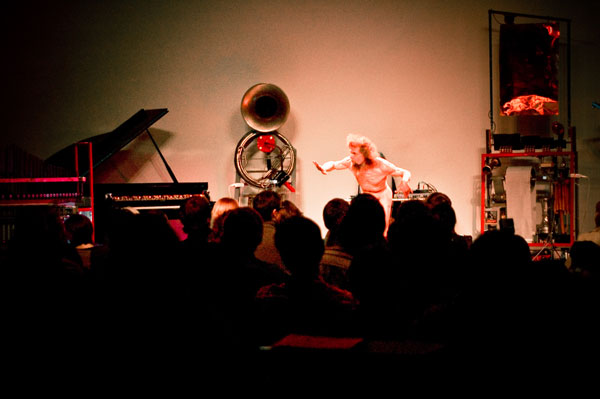
Man & Machine: A Naked Robotic Love Story is the tale of Godfried Willem-Raes, a pipe-smoking frazzle-haired dreamer who designs musical robots and his longtime lover and performance artist Moniek Darge.

They make a fascinating pair. The very sort of couple that’s proof there’s someone out there for everyone, no matter how strange or eccentric they may be.

They also get naked when they perform to “conduct” the various robots Godfried has created.

Filmmaker Jesse Roesler followed the couple to create the documentary Man & Machine: A Naked Robotic Love Story. We tracked him down to find out what it was all about, and why you need to be naked to conduct a robot orchestra.

Risky Fuel: Your film’s name is Man & Machine: A Naked Robotic Love Story. What’s that all about?
Jesse Roesler, director: We first started filming with Godfried and Moniek back in 2005 and it was pretty much strictly about holy crap, this guy makes robots and he’s made an entire orchestra and he constructs it in the nude using sonar Doppler radar. It’s all very scientific and crazy and out there, but it all makes perfect sense once you learn the technology. But the more time I spent with them, the more I learned about Moniek, his long-term partner, the more I learned about their creative endeavours and the story really sort of shifted, it was originally about the music but it became more and more about their relationship and how you collaborate as a romantic couple.

What’s fascinating to me is that these people found each other. Like, they’re cosmically made for each other.
Absolutely. That’s kinda how we built the story. They’re both kind of out there doing their own super-specific creation of these bizarre musical instruments or performances. They found each other and seem absolutely perfect. And there’s probably no one out there who would seem as absolutely perfect for each other as these two.

So what does the robotic orchestra actually sound like?
It’s pretty chaotic. It’s not melodic necessarily or particularly rhythmic. But it’s also very striking and you can definitely see the interplay that’s happening with the body movement and the sounds that are being made. If you never heard what type of music this is it’s probably an experience you can’t be prepared for. It’s very different.

Godfried was initially kicked out of music school for being, “Absolutely not musically gifted.” What do you think?
I think, being a documentary filmmaker you get to spend some time with some very fascinating people, but there are very few people that I’ve met in my life that I consider to be an absolute genius and Godfried Wilmer is one of those. His mind is working at a speed and a level that is just awesome to behold. And I get that “not musically gifted” in a traditional sense, because he’s not. He even says that so much of music is about the rhetoric, and you have to spend so much time repeating these things over and over again to learn how to play an instrument in a very specific way. And his idea is to just get rid of that. I think that’s fascinating. Let a machine do that. And the human still gets to do the creative part, but the machine does the repetitive task part. I think that’s brilliant. But I get that a traditional musician sees that and goes “How can you even compare this to what we’re doing because it is so different?”

Part of what’s fascinating to me is how completely unhinged the music is. It’s like a newly created universe.
Their music is out there. It’s not something people put on a headset and jam out to. It’s not like people are driving to work in the morning and rocking out to Man & Machine Orchestra tunes. It’s not about that.

Let’s talk about the robots. What do they actually look like? How do they make their sounds? How does everything work?
I think the kind of the coolest thing about how they built these robots is they follow very philosophically with his being nude and using radar. The robots are also nude in that he doesn’t cover up any of the wiring or mechanics. He wants it all to be visible. So every robot, when you’re up close, you get to see how ever little piece functions and works. It’s like having x-ray glasses on a computer. If you could see every synapse firing, that’s what this is equivalent to. Some of them are incredibly technologically advanced. He’s created, for wood instruments like a flute or a trumpet, like, a shape of a mouth you know when you’re trying to make that sound right? He’s using latex and rubber to recreate the inside of the mouth and how he pushes air through that thing. So he’s really taken it and done some really innovative thinking to figure out how these things will work.

http://vimeo.com/19778959

Explain why he has to be naked.
There’s definitely a couple reasons. The first he’ll cite is that it’s completely scientific. He’ll put it that if you use the same technology that cops use in radar guns for speeding, if you covered your vehicle in a knit sweater the radar wouldn’t be able to get your speed because the radar needs to bounce off of a reflective surface. So it’s the same thing. If you were to be dressed and moving in front of the radar, yeah it would still probably pick up on the movement, but it wouldn’t be as precise as if it’s reflecting off of human skin. The naked body reflects the radar better. So there’s the scientific reason. But also there’s the philosophical thing. They would do demonstrations back in the ‘60s and ‘70s just because they’re of that mindset of the ‘60s that “Why are people so conservative about having nudity in public?” They were part of a demonstration on one of the beaches in Belgium where 20 or 30 people decided well, ‘Why should I have to wear clothes on the beach?’ It’s a very European attitude, but I know they were part of those early demonstrations. But I know that they believe why should we hide it? But it’s also in terms of the dance and the movement, he really believes that the human body is a machine, so just as he believes that he wants the robots to be naked, he wants you to see every muscle, every movement of your body. Why would a dancer cover that up? Because that’s essentially what’s making the body work. So that’s also what he’s seeing, the human body as a machine.

When you were putting the film together, what was the debate like when you had to decide, “OK, how much penis are we going to put in this?”
I still haven’t made the TV tape edit yet. Like, what do you do? Do you animate the blue dot to cover that up? That’s cheesy. And I didn’t want to cover it up and I wanted it to be how it is. So honestly I just wanted to present it as it was in all of its… it’s shocking to some people, most people probably at first, but it’s as you learn, as I learned from just being around them, after the initial first minute or two of going “Holy crap, they’re naked” then all of sudden you don’t notice anymore and it just goes away and it’s just part of who they are. I don’t know. I think it’s interesting and I think that’s part of why they do it too and you realize very soon there’s an initial shock but once you get used to it you just go, “Oh, this is how this works.”

What’s it like watching Godfried in his studio building things?
If you’ve seen any of the Frankenstein movies you get that feeling a little bit from the opening minute or two of the film. It’s like he is in the zone and he’s on to something and he knows exactly what he’s doing and there’s no way he can be distracted because as with any creative task painting or photography you get so immersed in the moment that everything else falls away. I think that there’s something kind of beautiful about that too and I definitely sense that being in the workshop with him that when he’s on to something his mind is working at an amazing rate. He has this all strategically and very scientifically planned out because he’s a musician but he’s also a performer and an engineer and he taught himself how to weld and there’s just so much knowledge into everything they do in a lot of different disciplines. For me, for example, I think I’m fairly creative in what I do, but I’m not a technician in the way that he is. So the fact that he can work both sides of his brain like that is pretty amazing.

What’s this movie really about? Musical rebellion, a whole new type of music? Or is this really just a love story?
I think for me it’s really two things and the first thing and the reason I was drawn to it was the idea of the authenticity of the work you’re creating as an artist and it’s like kind of a classic battle for anyone doing creative work. It’s like art vs. commerce. Like, how much do you pull back your creative inclinations to make your work more palatable to a larger general audience? I think it’s super-admirable that they have kind of never wavered from their creative vision and if people think that it’s wacky and out-there that’s totally fine. They’re just creating from this super-authentic space and I think that’s awesome and I think it’s something that a lot of commercial artists could learn from.

And I think the other component is definitely the love story.  Also, no matter how out there you are, no matter how much you think you need to conform, there’s always going to be somebody else out there who hasn’t conformed if you haven’t and it might seem lonely at first but you’re going to find that person that also stuck to their guns and was kind of the outcast maybe for a little while. But when those two outcasts find each other it’s probably more meaningful.

Leave a comment

Filed under Art, Concerts, Films, Music

I Want To Go To There: The Luminato6 Edition

Luminato, Toronto’s big, arty theatre/ music/ magic/ visual arts/ dance/ literary/ food/ everything festival announced the full lineup for this year’s event (a.k.a. Luminato6) yesterday at the Sony Centre.

Here at Risky Fuel, we love at least half of the things that Luminato, 6 or otherwise, celebrates, so I went down to check out what they have to offer this year.

The main highlights for our fellow indigent music lovers are obvious, as this year’s free concert series at David Pecaut Square (which will be fitted with dancing windsocks for the entirety of the festival) will include shows by K’naan (Friday, June 8), Rufus Wainwright (Saturday, June 10) and a matinee event with Dan Mangan and Kathleen Edwards (Saturday, June 16), but there were a number of events that I found just as, if not more, intriguing.

Here are, at random, five that got me disproportionately excited:

Love Over and Over: The Songs of Kate McGarrigle

June 15, Massey Hall

Kate McGarrigle was awesome for giving us her children, Rufus and Martha Wainwright, but she was also quite brilliant in her own right. The McGarrigle sisters wrote some absolutely lovely music and they sung even more beautifully, with a pitch-perfect and intuitive gift for harmony that no one (save for maybe the twins of Tasseomancy) has been able to match since.

This year at Luminato, family, friends and fans will be paying tribute to the late folk icon with a star-studded performance of her music. Anna McGarrigle, Rufus, Martha, Bruce Cockburn, Mary Margaret O’Hara, Emmylou Harris, Jane Sibbery, and members of Broken Social Scene and Stars, are scheduled to appear, so this concert is basically a music geek’s wet dream, and the closest we’ll get to a live version of the incredible McGarrigle Hour album now that we’ve lost Kate.

Irvine Welsh

June 12, TIFF Bell Lightbox

The Scottish author who made me feel like the biggest bad ass when I was a hopelessly bookish teenager is releasing a prequel to Trainspotting called Skagboys and he’s coming to Toronto to talk about it. This fills me with all sorts of twisted nostalgia, because I miss Sick Boy, Begbie and Renton. And my own youth.

Deltron 3030

June 11, David Pecaut Square

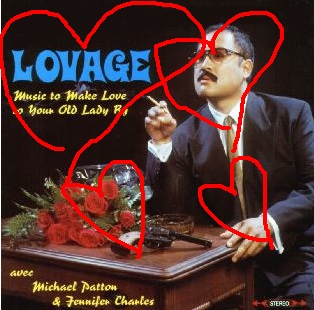
I made this graphic to represent my love for Lovage.

Deltron 3030, better known in the Risky Fuel household as “A Significant Part of Lovage,” will be playing with Montreal’s Nomadic Massive. This is exciting for me, because it means the chance to see Nathaniel Merriweather himself, Dan the Automator, along with Kid Koala. And then I’ll try my hardest to pretend that Mike Patton and Jennifer Charles are there, because this is the closest I will ever, ever get to my beloved Lovage again.

Toronto Carretilla Initiative

June 8-17, The Distillery District and various places through the city

According to the press release, “For Austrian-born artist Rainer Prohaska, preparing and consuming food is a fine art. The Toronto Carretilla Initiative sets to boldly immerse audiences in the process of cooking across the city. The project marks the  first time that Luminato’s Food Program will include an experience that marries elements of visual arts with culinary craft.”

Basically,this dude is going to set up arty installations in which people can prepare food and then eat it. Then he closes up the show and moves on to the next location. It sounds both weird and delicious, which are two things that truly speak to me. Locations will be announced on the Luminato website as the event progresses in case you want to stalk the food-making sculptures with me.

Stewart Goodyear: The Beethoven Marathon

June 9, TELUS Centre for Performance and Learning, Koerner Hall

Concert 1, 10:00 a.m. 1:45 p.m., 3 hours and 45 minutes with intermission

Concert 2, 3:006:30 p.m., 3 hours and 30 minutes with intermission

Concert 3, 8:3011:30 p.m., 3 hours with intermission

This crazy bastard is going to play Beethoven for over 10 hours!

I’m excited about pianist Stewart Goodyear’s attempt to play all 32 of Beethoven’s sonatas in the course of one day (it’ll take over 10 hours in total) for three reasons:

1. It’s a genuinely interesting undertaking.

2. It sounds like something the latest BBC incarnation of Sherlock would do when he’s bored and then Watson would act completely annoyed by the project, but he’d still smile and lick his lips and begrudgingly tolerate the whole experiment, because he loves his nutjob flatmate.

3. As a fitness geek, I’m really curious to know what, if any, training he’s doing for this event. Almost 11 hours of physical activity, even with intermissions, is extremely demanding. How is he building the endurance to handle this? What is he going to eat/drink to refuel himself during those breaks? Is it even possible to remain alert and proficient enough to play piano well after that long, no matter how good and how well prepared you are?

Luminato runs from June 8 – June 17 this year. Go visit their website (launching soon) for more details.

Leave a comment

Filed under Art, Books, Concerts, Culture, Dance, Films, Food, Music, Uncategorized

Youtube Hits Walk Off The Earth Talk About Their 5-Players-1-Guitar Goyte Cover

Walk Off The Earth

Walk Off The Earth

If you haven’t seen the spectacular video of Burlington band Walk Off The Earth covering Australian band Goyte’s song “Sombebody That I Used To Know” as a five people hammering away at a single guitar simultaneously, well, you probably don’t have any friends on the internet.

Said video’s gone super-viral, like 19 million viewers viral. So Aaron tracked down Sarah Blackwood, one of the singers, and asked her what it was like making this unique video.

You can read the story at Spinner by clicking here.

Walk Off The Earth’s now-famous cover song:


1 Comment

Filed under Films, Music, Shameless Promotion

Atlas Fugged: Why Ayn Rand Is Making Me Boycott Lululemon

Earlier this month, pricey yoga pant and cheesy sentiment pushers Lululemon started putting the phrase “Who is John Galt?” on their bags. Then they posted a blisteringly insipid entry on their blog to explain how a quote from Ayn Rand’s epic heap of political science excrement, Atlas Shrugged, had become the new “drink eight glasses of water each day.”

Lululemon founder, Chip Wilson, an intellect who usually spends his time contemplating the deep philosophies of the Landmark cult apparently first read Atlas Shrugged when he was 18 and was recently inspired to dig into the greater meaning of the book. (This Ayn Rand Appreciation Trajectory, I would like to point out, is the exact opposite of any rational person’s.) “Only later, looking back, did he realize the impact the book’s ideology had on his quest to elevate the world from mediocrity to greatness (it is not coincidental that this is Lululemon’s company vision)” writes lulu blogger Alexis (emphasis hers, sadly enough).

Atlas Shrugged, Alexis goes on to explain, is a story about a horrible world where the bad government has too much control, and that leads to mediocrity. And that might sound far-fetched, but thing is, we all accept mediocrity in our daily lives! So, basically, “Who is John Galt?” is on their bags to remind their customers to strive for greatness and never accept mediocrity. (Unless, of course, we’re talking about accepting the massive dive in quality that I noticed when Lululemon stopped making their clothing in Canada.)

Because $100 yoga pants that are going to pill after one wash = greatness.

Now, I have been known to enjoy the occasional piece of Lululemon clothing. I work in the fitness industry, after all, so lulu-wearing is a bit of an inevitability. But I just can’t abide by this. As long as any words from that scourge on political theory and literature remain on Lululemon’s bags, I will stay the fuck out of their store.

You see, I’m particularly sensitive to all things of this nature because I went through an ill-advised Rand phase myself. I was 13, I was bullied and had very few friends, and I’d had some run-ins with a school system that didn’t really want to deal with the weird gifted kid. And then I found a bunch of books about misunderstood special people who weren’t respected by society and went and lived in the mountains with other special people and lived happily ever after, and I thought that sounded really good. But then I turned 14, gained a basic understanding of the world and realized how fucking juvenile and downright stupid Ayn Rand’s writing and her bullshit philosophy, Objectivism, really were.

If Objectivism promotes excellence, then how do you explain this awful artwork?

You know how former smokers are the most virulent and in-your-face anti-smokers? Well, that’s me with Ayn Rand. I hate her so much that I can’t even bring myself to revisit any of her work and craft a more sophisticated argument against her than the one I developed while I was, well, developing. But I’m not going to let that stop me. If Lululemon can write a blog post that features an embarrassingly infantile grasp of an embarrassingly infantile philosophy, then so can I.

Here is a synopsis of Atlas Shrugged, as remembered by my 13-year-old self:

There’s this woman named Dagny Taggart and she runs her family business Taggart Steel or whatever the hell it’s called. She is a woman, but she doesn’t let her IQ-melting vagina of mediocrity get in the way of her being a super awesome business man, because, um… because Ayn Rand needed a way to reconcile her misogyny with her narcissism.

She has a trusty manservant who works his ass off for her and her company, but he’s working class, so fuck him.

Taggart Steel Or Industries Or Whatever make the best steel ever. I think it’s made with some secret magical ingredient or blend or something. I guess it’s basically the steel version of luon, the supposedly secret special spandex blend that Lululemon uses in most of their clothing.

Anyway, having the super best steel that makes the best railway supplies (I’m just going with “supplies” because I don’t remember if they made tracks or trains or both and I really don’t care) makes them major players, because the railway is pretty much the most important form of transportation in the world. So yeah. Ayn Rand was such a fucking visionary that she couldn’t imagine a future in which the railway would not be the world’s predominant form of transportation.

And the government is very mean and evil. They’re making everyone do socialism to each other, which is, obviously, encouraging mediocrity. And this is having a terrible impact on Taggart Stuff, but I don’t really remember why. Maybe they’re trying to outlaw the magic steel ingredient because it’s not fair that the other steel companies don’t have it. Or maybe they’re trying to make them pay their factory workers more than a dollar an hour. Whatever the case, socialism is destroying the world and making Dagny sad.

I bet socialism made her wear this ugly hat, too!

Also, everyone is running around and saying “Who is John Galt?” which, if I recall correctly, is some sort of combination of “whatever,” “What can you do?” and “Who gives a shit?” Because this is obviously a catchphrase that would catch on. People would totally use “Who is John Galt?” as an expression of futility, apathy and socialism-encouraged mediocrity. Among other things, Ayn Rand is an expert on the development of catchphrases.

So the oppressive government makes things continually worse. Some trains crash or something. People commit socialist atrocities for hundreds of pages. Somewhere in all of this, we find out that John Galt is a real dude and not just a catchphrase. He was a totally awesome industrialist visionary moneymaker, but the horrible socialist government wouldn’t let him be great (like Kanye). So he abandoned the world. And apparently this was a big deal, even though his disappearance has lead to little more than a shitty catchphrase.

John Galt meets Dagny somehow. He does not rape her, because he’s kind of a pussy compared to Howard Roark, but, somehow, she manages to respect him, anyway. He takes her to the secret mountain compound that he established when he left the world behind, because this is an Ayn Rand book, and her solution to EVERYTHING is to run away and live in the mountains. Same shit goes down in Anthem. And I think it happens in some of her other stories as well.

In the mountain compound, Dagny meets a bunch of leaders of men. Then we reach one of the few moments in the book that I remember with any clarity: Dagny sees a woman and asks what she does. Galt tells her that the woman is a writer. Dagny wants to know if she’s ever heard of anything she’s written. And John Galt is all “She writes in her head.”

What. The. Fuck? She writes in her head? I think the logic in the book is that the stupid leeches and mediocre socialists of the world aren’t good enough for her writing, so she keeps it to herself. And everyone thinks that’s cool, because she’s a leader of men.

If some struggling artist protester did that, objectivists would lose their shit. But when Ayn Rand’s precious Mary Sue does it in Atlas Shrugged, it’s totally fucking awesome. So basically, fuck the working class who are toiling away in your factories, WORKING, to build things and carry out your super-important libertarian ideas while you pay them nothing. But yay people who write in their heads and do absolutely NOTHING.

Anyway, Dagny comes back for some reason or other (Rand needed to further the plot) and things get even more covered in socialist germs. Mediocrity is everywhere! Shit is falling apart! It gets so bad that John Galt is forced to take over the radio waves (again, Rand proves herself a visionary, completely nailing modern technology) to deliver a speech. It lasts for NINETY PAGES. And he basically spends the whole speech saying that he rules and socialism drools. I don’t remember any of the details. It’s really fucking obnoxious and self-aggrandizing and basically like reading an interview with an even more humourless Bono for NINETY PAGES.

Shit falls apart some more, and Dagny finally escapes to the mountains for good, leaving her trusty manservant to die. And he’s totally cool with that. This dude has followed her through most of the book, taken care of all of her shit, worked his ass off with no complaints and been the most loyal employee in the history of the world. But he wasn’t a rich visionary, so he wasn’t allowed to go the mountains. And, once again, he’s cool with this. He dedicates his whole life to Taggart Assholes, works harder than anyone else in the book — especially that incorrigible cunt who writes books in her head — but he has to die because he’s not a rich visionary. He’s the portrait of everything that rich people wish that those wretched poor would be and it’s still not fucking good enough! He has to die! AND HE’S COOL WITH IT.

Because nothing makes objectivists harder than the idea that the poors and the working class will wake up one day and realize that they don’t deserve to live and just off themselves. It would solve all of the world’s problems! A bee colony with no worker bees! What could go wrong?!

I don’t really remember what happens after that. I’m assuming that all of the poors and socialists are suffocated by mediocrity and then the awesome rich people descend from the mountains to rebuild the world. Or maybe they stay there and the awful poors continue to lurch around and they start saying “Who were all of those fucking assholes?” instead of just “Who is John Galt?” I’m sure the ending is stupid, whatever it is.

Wait, I just googled “Atlas Shrugged last line” and this is what I found:

He raised his hand and over the desolate earth he traced in space the sign of the dollar.

That’s just amazing. And it just goes to prove how fucking right Ayn Rand was about how useless liberal pieces of shit like me really are. Because there is absolutely nothing I could possibly write to parody her that would even come close to that line.

I hate you so much! I wish you'd get poor, go on Medicare and die. OH WAIT, YOU ALREADY DID.


84 Comments

Filed under Books, Culture, Films