Author Archives: Sarah Kurchak

Atlas Fugged: Why Ayn Rand Is Making Me Boycott Lululemon

Earlier this month, pricey yoga pant and cheesy sentiment pushers Lululemon started putting the phrase “Who is John Galt?” on their bags. Then they posted a blisteringly insipid entry on their blog to explain how a quote from Ayn Rand’s epic heap of political science excrement, Atlas Shrugged, had become the new “drink eight glasses of water each day.”

Lululemon founder, Chip Wilson, an intellect who usually spends his time contemplating the deep philosophies of the Landmark cult apparently first read Atlas Shrugged when he was 18 and was recently inspired to dig into the greater meaning of the book. (This Ayn Rand Appreciation Trajectory, I would like to point out, is the exact opposite of any rational person’s.) “Only later, looking back, did he realize the impact the book’s ideology had on his quest to elevate the world from mediocrity to greatness (it is not coincidental that this is Lululemon’s company vision)” writes lulu blogger Alexis (emphasis hers, sadly enough).

Atlas Shrugged, Alexis goes on to explain, is a story about a horrible world where the bad government has too much control, and that leads to mediocrity. And that might sound far-fetched, but thing is, we all accept mediocrity in our daily lives! So, basically, “Who is John Galt?” is on their bags to remind their customers to strive for greatness and never accept mediocrity. (Unless, of course, we’re talking about accepting the massive dive in quality that I noticed when Lululemon stopped making their clothing in Canada.)

Because $100 yoga pants that are going to pill after one wash = greatness.

Now, I have been known to enjoy the occasional piece of Lululemon clothing. I work in the fitness industry, after all, so lulu-wearing is a bit of an inevitability. But I just can’t abide by this. As long as any words from that scourge on political theory and literature remain on Lululemon’s bags, I will stay the fuck out of their store.

You see, I’m particularly sensitive to all things of this nature because I went through an ill-advised Rand phase myself. I was 13, I was bullied and had very few friends, and I’d had some run-ins with a school system that didn’t really want to deal with the weird gifted kid. And then I found a bunch of books about misunderstood special people who weren’t respected by society and went and lived in the mountains with other special people and lived happily ever after, and I thought that sounded really good. But then I turned 14, gained a basic understanding of the world and realized how fucking juvenile and downright stupid Ayn Rand’s writing and her bullshit philosophy, Objectivism, really were.

If Objectivism promotes excellence, then how do you explain this awful artwork?

You know how former smokers are the most virulent and in-your-face anti-smokers? Well, that’s me with Ayn Rand. I hate her so much that I can’t even bring myself to revisit any of her work and craft a more sophisticated argument against her than the one I developed while I was, well, developing. But I’m not going to let that stop me. If Lululemon can write a blog post that features an embarrassingly infantile grasp of an embarrassingly infantile philosophy, then so can I.

Here is a synopsis of Atlas Shrugged, as remembered by my 13-year-old self:

There’s this woman named Dagny Taggart and she runs her family business Taggart Steel or whatever the hell it’s called. She is a woman, but she doesn’t let her IQ-melting vagina of mediocrity get in the way of her being a super awesome business man, because, um… because Ayn Rand needed a way to reconcile her misogyny with her narcissism.

She has a trusty manservant who works his ass off for her and her company, but he’s working class, so fuck him.

Taggart Steel Or Industries Or Whatever make the best steel ever. I think it’s made with some secret magical ingredient or blend or something. I guess it’s basically the steel version of luon, the supposedly secret special spandex blend that Lululemon uses in most of their clothing.

Anyway, having the super best steel that makes the best railway supplies (I’m just going with “supplies” because I don’t remember if they made tracks or trains or both and I really don’t care) makes them major players, because the railway is pretty much the most important form of transportation in the world. So yeah. Ayn Rand was such a fucking visionary that she couldn’t imagine a future in which the railway would not be the world’s predominant form of transportation.

And the government is very mean and evil. They’re making everyone do socialism to each other, which is, obviously, encouraging mediocrity. And this is having a terrible impact on Taggart Stuff, but I don’t really remember why. Maybe they’re trying to outlaw the magic steel ingredient because it’s not fair that the other steel companies don’t have it. Or maybe they’re trying to make them pay their factory workers more than a dollar an hour. Whatever the case, socialism is destroying the world and making Dagny sad.

I bet socialism made her wear this ugly hat, too!

Also, everyone is running around and saying “Who is John Galt?” which, if I recall correctly, is some sort of combination of “whatever,” “What can you do?” and “Who gives a shit?” Because this is obviously a catchphrase that would catch on. People would totally use “Who is John Galt?” as an expression of futility, apathy and socialism-encouraged mediocrity. Among other things, Ayn Rand is an expert on the development of catchphrases.

So the oppressive government makes things continually worse. Some trains crash or something. People commit socialist atrocities for hundreds of pages. Somewhere in all of this, we find out that John Galt is a real dude and not just a catchphrase. He was a totally awesome industrialist visionary moneymaker, but the horrible socialist government wouldn’t let him be great (like Kanye). So he abandoned the world. And apparently this was a big deal, even though his disappearance has lead to little more than a shitty catchphrase.

John Galt meets Dagny somehow. He does not rape her, because he’s kind of a pussy compared to Howard Roark, but, somehow, she manages to respect him, anyway. He takes her to the secret mountain compound that he established when he left the world behind, because this is an Ayn Rand book, and her solution to EVERYTHING is to run away and live in the mountains. Same shit goes down in Anthem. And I think it happens in some of her other stories as well.

In the mountain compound, Dagny meets a bunch of leaders of men. Then we reach one of the few moments in the book that I remember with any clarity: Dagny sees a woman and asks what she does. Galt tells her that the woman is a writer. Dagny wants to know if she’s ever heard of anything she’s written. And John Galt is all “She writes in her head.”

What. The. Fuck? She writes in her head? I think the logic in the book is that the stupid leeches and mediocre socialists of the world aren’t good enough for her writing, so she keeps it to herself. And everyone thinks that’s cool, because she’s a leader of men.

If some struggling artist protester did that, objectivists would lose their shit. But when Ayn Rand’s precious Mary Sue does it in Atlas Shrugged, it’s totally fucking awesome. So basically, fuck the working class who are toiling away in your factories, WORKING, to build things and carry out your super-important libertarian ideas while you pay them nothing. But yay people who write in their heads and do absolutely NOTHING.

Anyway, Dagny comes back for some reason or other (Rand needed to further the plot) and things get even more covered in socialist germs. Mediocrity is everywhere! Shit is falling apart! It gets so bad that John Galt is forced to take over the radio waves (again, Rand proves herself a visionary, completely nailing modern technology) to deliver a speech. It lasts for NINETY PAGES. And he basically spends the whole speech saying that he rules and socialism drools. I don’t remember any of the details. It’s really fucking obnoxious and self-aggrandizing and basically like reading an interview with an even more humourless Bono for NINETY PAGES.

Shit falls apart some more, and Dagny finally escapes to the mountains for good, leaving her trusty manservant to die. And he’s totally cool with that. This dude has followed her through most of the book, taken care of all of her shit, worked his ass off with no complaints and been the most loyal employee in the history of the world. But he wasn’t a rich visionary, so he wasn’t allowed to go the mountains. And, once again, he’s cool with this. He dedicates his whole life to Taggart Assholes, works harder than anyone else in the book — especially that incorrigible cunt who writes books in her head — but he has to die because he’s not a rich visionary. He’s the portrait of everything that rich people wish that those wretched poor would be and it’s still not fucking good enough! He has to die! AND HE’S COOL WITH IT.

Because nothing makes objectivists harder than the idea that the poors and the working class will wake up one day and realize that they don’t deserve to live and just off themselves. It would solve all of the world’s problems! A bee colony with no worker bees! What could go wrong?!

I don’t really remember what happens after that. I’m assuming that all of the poors and socialists are suffocated by mediocrity and then the awesome rich people descend from the mountains to rebuild the world. Or maybe they stay there and the awful poors continue to lurch around and they start saying “Who were all of those fucking assholes?” instead of just “Who is John Galt?” I’m sure the ending is stupid, whatever it is.

Wait, I just googled “Atlas Shrugged last line” and this is what I found:

He raised his hand and over the desolate earth he traced in space the sign of the dollar.

That’s just amazing. And it just goes to prove how fucking right Ayn Rand was about how useless liberal pieces of shit like me really are. Because there is absolutely nothing I could possibly write to parody her that would even come close to that line.

I hate you so much! I wish you'd get poor, go on Medicare and die. OH WAIT, YOU ALREADY DID.
84 Comments

Filed under Books, Culture, Films

The Murga Dancers Of Carnival, Caprichosos De San Telmo

Caprichosos De San Telmo

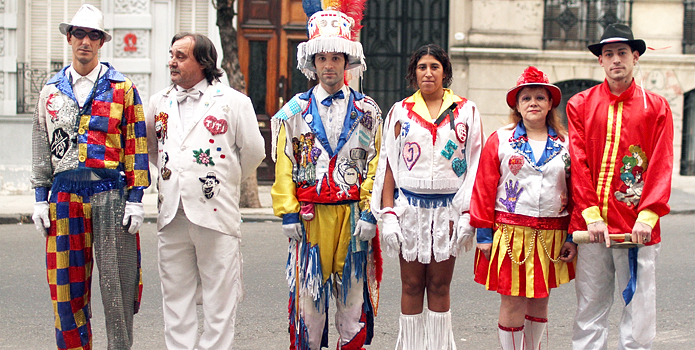
Of the five music-related documentaries that I saw at the Toronto International Film Festival this year, four were about internationally famous pop and rock artists, and the other was about a group of working class musicians who live on the fringes of society in Buenos Aires and perform a style of African-influenced song and dance known as Murga.

This might sound like a particularly easy game of One Of These Things Is Not Like The Other, but the film, Caprichosos De San Telmo, really isn’t so far removed from its more famous and mainstream counterparts. The group, also known as Caprichosos De San Telmo, might face a different cultural and financial reality than U2, Paul McCartney and Neil Young, but their musical experiences — the sacrifices they make for their craft, the creative process, and the pure joy and beauty of expression — are remarkably similar.

I had a chance to talk to director Alison Murray about the film, the band and the politics of Murga dancing during the festival. Here are some of the highlights:

How did you first discover Caprichosos De San Telmo?

About two and a half years ago, I was walking around in the neighbourhood of San Telmo, pushing my daughter in her stroller, she must have been six months at the time. I was trying to get her to stop crying, and I heard this drumming. I started walking towards the drumming and, as the drumming got louder, she fell asleep. I thought “OK, this works,”  so I kept going until I found the source of the noise, and I saw this Murga rehearsing in the park. I was just fascinated by the rhythms and the dancing, but particularly the dancing, because I have a long relationship with dance and filming dance. It just seemed so obviously African, and yet there were no African faces in the group. That led me to explore the history of Africans in Buenos Aires and I learned that there had been a huge African population that’s now pretty much gone.

Did you know almost immediately that you wanted to make a film about them, or did the idea grow on you over time?

I thought that it would be a good subject and then I think I mentioned it to my producer, Kathleen Smith, who I work with a lot and she said I should do it. It was long after that that I just took my camera and started shooting kind of randomly, not really knowing if it was going to lead anywhere or not. And once I started, it kind of gained momentum and I realized that it was going to be a project worth completing.

Were the members of the group reticent when you first started showing up with your camera?

Not at all. They loved it. In particular, some of them were real kind of clowns who jumped in front of the camera every chance they could. And that’s my experience with documentary making, at least for me. I made a film about carnival workers in the U.S. and also about people hopping freight trains and often people really like to be filmed. If you’re respectful and you’re not making a spectacle of them and it’s not kind of a reality TV treatment, then I think people feel validated by having someone who’s interested in their lives and it makes them feel good.

Did you know anything about the Murga before you discovered Caprichosos?

No. I didn’t know what it was. I didn’t know the origins. Nothing. I just encountered them. I went to Buenos Aires because I was interested in tango, and I didn’t realize there were other dances that were part of the culture of the city as well, like Murga.

Pop culture seems to have some influence on the group, at least in terms of the way that its members decorate their costumes with famous logos and characters. Is it also an influence on the music and the dance?

That’s an interesting question. That’s a kind of controversial question, in a way. Some of them have Bart Simpson or The Rolling Stones tongue on their costume, but other people have Che Guevara, which is very political. So there is a little bit of interchange with pop culture in that respect. But in terms of the dance,  somebody said to me once, “Oh yeah, but those movements that those guys are doing, that’s from hip-hop, that’s not Murga.”

Well,  hip hop-has African routes as well as Murga has African roots. You can say that’s not traditional Murga, but it’s coming from the same source, so I think it’s all valid. Amongst some of the dancers, there was some contention over whether something from hip-hop fit into their vocabulary. You could see movements in hip-hop and other movements in Murga that probably have both come from African dance somewhere along the lines, but the Murga dancers didn’t learn those moves from watching MTV, they learned them because they’ve always been in the Murga vocabulary.

Do you think that the Murga is a malleable art form?

Yes. Definitely. You can see different communities and different neighbourhoods have a distinct style in each area, but that’s starting to change a little bit now. Pichi, the leader of the group that I filmed was a little bit disparaging of that because he said that… it’s a double-edged sword. There’s a little more support for Murga in terms of them getting grants and things, but that means that there’s people who are learning Murga and then going into another community and teaching it, like teaching it in a community college. That’s a new thing that’s just started. Pichi doesn’t like that because he thinks each Murga should develop its own style within the neighbourhood,  and if people start traveling around the city,  taking different styles in different places,  then those styles are going to get all mixed up and watered down. I don’t necessarily think that’s a bad thing, but he’s a little uncomfortable about that idea.

I loved Pichi’s story in the film. He’s almost like KISS or Cher, in the way that he keeps threatening to retire from music.  Is he still with the group?

Oh yeah. I don’t think he’s ever going to stop, and this film is just kind of given him more passion to keep on going.

Leave a comment

Filed under Culture, Dance, Films, Music

A Review Of Aaron’s Review: Tasseomancy – Ulalume

Tasseomancy

Earlier this month, we told you that Aaron’s review of twin sister gloomy art rock duo Tasseomancy’s (née Ghost Bees) new album, Ulalume, had been published in the latest issue of Rue Morgue Magazine.

Now, we’re usually very supportive of each other’s writing endeavors, but I have to confess that I was a little disappointed with this particular review. Aaron likes to think that he’s some sort of expert on morbid young women because he’s listened to so many of their musical projects and because he married one.

But the only people who can truly understand and explain morbid young women are their fellow sisters of darkness. I tried to help Aaron when he was writing the review, but he refused to listen to me. Here are some of the ideas that he rejected:

– Sari and Romy Lightman are a pair of Emily Stranges for the non-dilletante.

– Imagine Wednesday Adams with a sister instead of that idiot Pugsly.

Dead Ringers for girls.

– Something about Brian De Palma’s Sisters that I couldn’t fully formulate.

– Tasseomancy are the duo that Laura Palmer and Madeleine Ferguson would have formed if BOB hadn’t gotten to them first.

– Holy crap! The conjoined twins from Carnivàle traveled to the future and separated! Sadly, the surgery may have cost them their contortion skills.

Ulalume sounds like it was crafted by people who spent many carefree childhood days memorizing the words to Edgar Allan Poe’s “The Bells.”

Ulalume sounds like a musical version of that episode of Night Gallery when the woman keeps having a dream that a stranger is coming to her door, and then, one time, she finally opens the door and realizes that the scary person is herself.

– It’s a little-known fact that Liv Ullmann’s character in The Hour Of The Wolf was actually pregnant with Sari and Romy Lightman.

– Imagine Ingmar Bergman’s Persona as a jam session.

– A Tasseomancy album is reminiscent of Black Swan, if you removed all six thousand of Vincent Cassel’s monologues about how the white swan is pure and the black swan is sexual and raw and Natalie Portman is really good at being the perfect and virginal white swan, but he doesn’t know if she can be the provocative black swan, because she’s so white and pure like the white swan and not at all like the sexually bold black swan.

Leave a comment

Filed under Art, Films, Music

10 Things I Hate About Zombies

The Walking Dead

The Walking Dead

Last week, I noticed that The Walking Dead had been added to Netflix Canada.

“Oh,” I thought, not the least bit excited. “I guess I should watch that.”

I’m usually all over fancy pants cable and premium TV shows. I’’m willing to watch almost anything that HBO, Showtime or AMC puts out, provided that it’s not called Entourage. HBO has seduced me with the wild west, vampires, Dust Bowl circus freak saviors who fight evil preachers, and prison spoon rape. Showtime has convinced me to laugh at cancer, and to care about a serial killer a lot longer than I really should have. I tried to resist AMC’s offerings at first, but I’ve been their bitch since Betty Draper shot the pigeons.

But I was  looking forward to watching The Walking Dead the way that I look forward to scrubbing the toilet. I probably wouldn’t enjoy it, but it was a chore that needed to be done.

Here, the empty road represents my interest in the show.

We’re three episodes into the show now, and I’m not really sure what its purpose is. There are zombies, and a rag tag group of survivors. Guys beat the shit out of zombies (and each other) while women stand in the background and scream. A lot. There’s usually a bad monologue of some sort thrown in. And then there are more copious beatings with womenfolk in the background. There’s no greater purpose so far. The writers know how to provide viewers with zombie gore, but that’s about the extent of their talents. It’s like they’re constantly missing the point.

Imagine if Deadwood had been written by people who thought that the show was solely about Ian McShane saying the f word. That’s about the level that The Walking Dead is working on.

And yet it’s not the quality of the show that’s troubling me. I can watch the hell out of a shitty show like 24, or Lost. What really bothers me about The Walking Dead is, well, the walking dead themselves. I am just so over zombies.

It wasn’t always this way. I must have been cool with zombies at some point. I like The Zombies. I like “Thriller.” I dug that Cranberries song when I was 12, even though I thought she was actually singing “Tommy” for a few months.

I appreciated the Night Of The Living Dead when I was a teenager. I’m still a big fan of the opening scene and often think of Barbara’s jackass brother biting it when I run through cemeteries, content that I would be able to outrun a traditional zombie if it ever came to that. And I admire the crisp and unapologetic nihilism of the ending.

As an old school David Cronenberg devotee, I’m also pretty partial to Shivers. But I don’t even know if his crazed sex zombies count as actual zombies, anyway, because everything that Cronenberg did before the turn of the century was in its own world and so much more awesome than the rest of pop culture.

This is how sex zombies are made.

28 Days Later was cool enough. I laughed at Shaun Of The Dead. I even went to see Juan Of The Dead, a Cuban zombie comedy, at TIFF this year. It had its moments, although watching the young PR interns try to figure out the communism jokes was funnier.

But I just can’t deal with this shit anymore. I am so over zombies, and here are 10 reasons why:

1. They’re ugly.

And yet I'm completely cool with this.

This is a dumb and superficial reason, I know. It doesn’t even make sense, given that Slobulus is my third favourite MadBall, but I have a visceral reaction to melting flesh that drapes off of a skull. Or at least a skull that is not ball-shaped. In the abstract, I admire what people can do with makeup and prosthetics, but actually looking at those accomplishments makes me want to vomit.

And what is with their posture? Am I really supposed to believe that some sort of magic or scientific experiment gone wrong is capable of reanimating every single part of the body except the erector spinae muscles? That’s absurd.

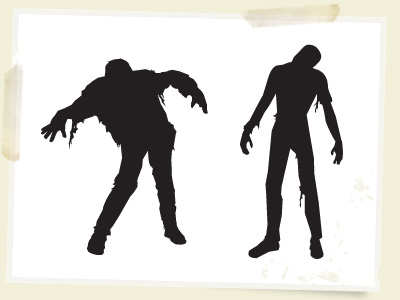
Stand up straight, young dead man!

2. They’re annoying.

Sometimes, when I’m watching a zombie movie, I just want to tell the zombies to shut up. If I wanted to watch two hours of pointless, unintelligible droning, I’d go to a Coldplay concert.

Sadly, Coldplay's quest for brains remained unfulfilled, because no one who has any would attend one of their shows.

3. They’re eerily reminiscent of past trauma.

If I wanted to be surrounded by a terrifying horde of mindless monsters hellbent of my annihilation, I’d go back to high school.

4. They’re not glamourous in any way.

In other words, zombies don't do this.

I’m sick of vampires, too, but at least I get that obsession. Vampires are sexy and dangerous, when they’re not written by Stephenie Meyer. They play on our Freudian fixation with death. Zombies seem to speak to some bizarre survivalist fantasy that I have never experienced in any way.

5. They’re unbearably tired as a counterculture icon

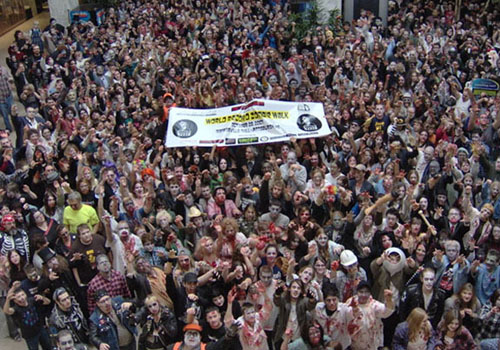
Look at all these special snowflakes.

Oh, you’re having a zombie walk? I’m sorry, I can’t make it. I just zombie walked this morning, and I’ve got another one scheduled for tomorrow.

Wake me up when someone organizes a Bene Gesserit walk.

The flash mob must flow.

By the way, adding zombies to any work of fiction does not immediately make you a creative genius.

6. Zombie ______  costumes are just the nerdy kid’s answer to Sexy ______ costumes.

At least there’s still a tiniest bit of potential in ironic sexy costumes (like Sexy Oil Spill, or Sexy Steve Jobs) but if you’re dressing up as Zombie Anything, you are an unimaginative ass.

Speaking of which….

7. The zombie mythology is not conducive to a whole lot of creativity.

There’s a zombie outbreak! A rag tag group of people who would otherwise never associate with each other are going to have to learn how to cooperate and survive! And maybe find some sort of promised land! Which leads me to….

8. Zombie stories remind me of Ayn Rand stories.

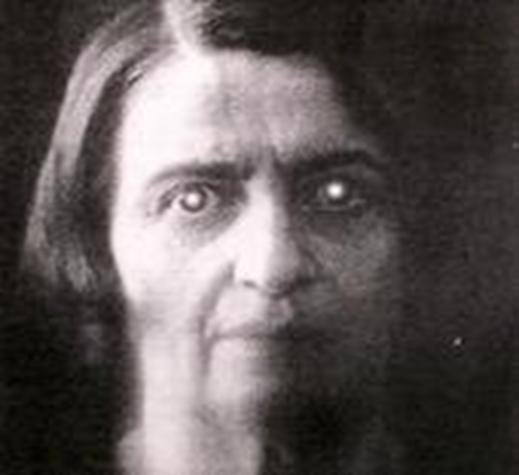
On a whim, I did a google image search for "Ayn Rand zombie." This is what I got.

Let’s go live in the mountains, far away from the horrible leeches who are trying to feed off of us!

9. Survival in a zombie apocalypse isn’t really that appealing.

If I woke up tomorrow to discover that zombies had destroyed everyone and everything I knew and loved, and that my only option for survival was to join a rag tag group of people who would otherwise never associate with each other, like I was joining the worst season of The Real World ever, I would probably be all “So… there’s no Chipotle anymore? Fuck this, I’m going to let the zombies eat me.”

"Seriously, God. No more burrito bowls."

10. Why do we always assume that they have no internal life?

Has anyone ever tried to meet the zombies halfway? Are we really just concluding that they’re brain-dead because they’re nonverbal? Maybe they don’t know that it’s not nice to try to eat us and they just need it to be explained to them in terms they understand. And maybe they’re only fighting back because we’re trying to shoot all of them in the head.

You know who else doesn’t know how to talk and wants to eat me?

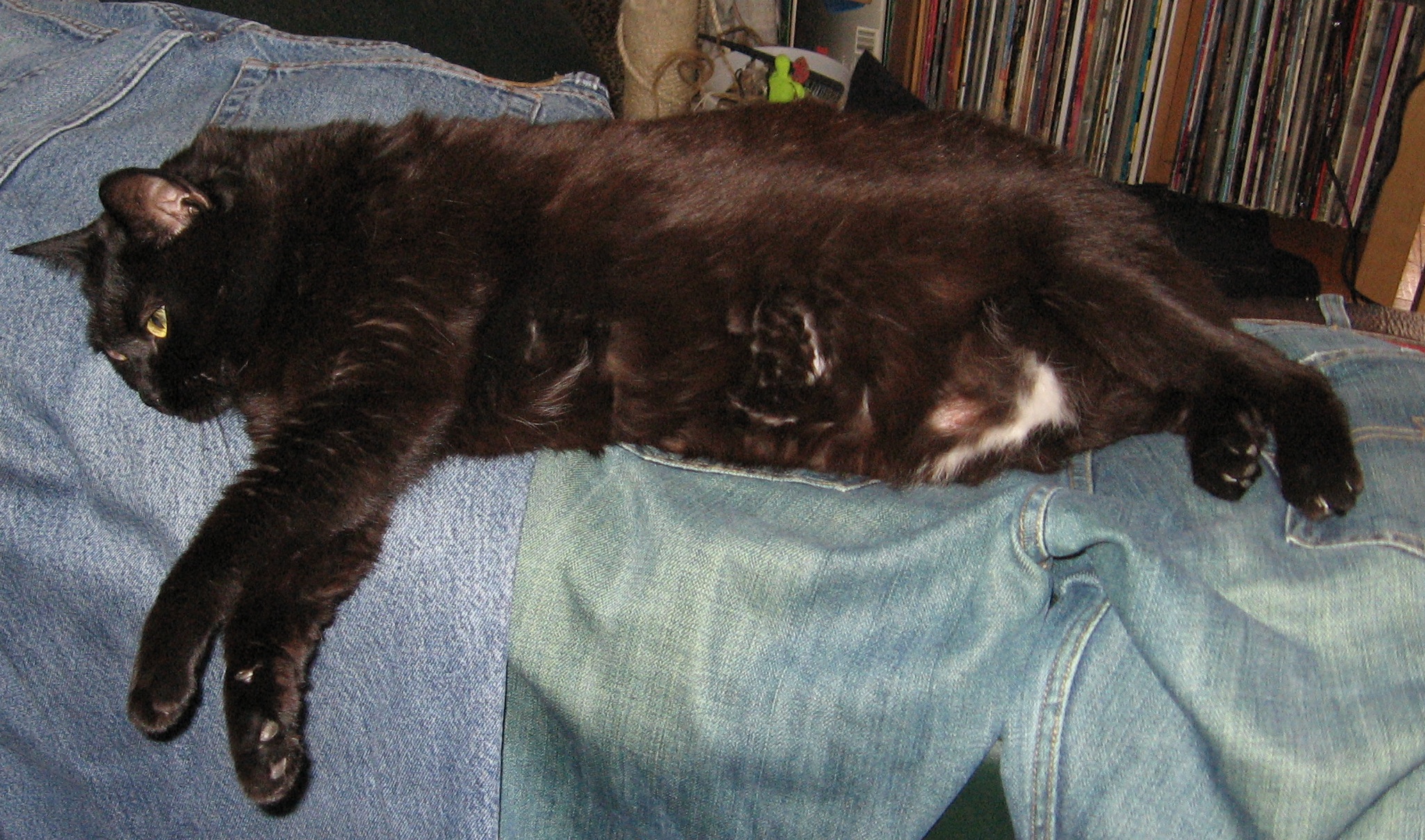
My cat.

And we’ve managed to develop a mutually beneficial relationship, so I don’t understand why we shouldn’t try harder with zombies.

You know, upon further reflection, my real issue might be with people.

4 Comments

Filed under Culture, Films, Television

The Pains Of Being Change Of Heart

Ian Blurton, Change Of Heart/Blurtonia/C'Mon
Ian Blurton, Change Of Heart/Blurtonia/C’Mon


I think I was 13 on the fateful night when Ian Blurton announced, during the course of an interview on CFNY’s Live In Toronto, that Change Of Heart were going to break up. Even by 13-year-old music nerd standards, my reaction was irrational. I almost vomited. I broke into hysterical tears. Then I turned on my poor mother.

If she’d taken me to go see them in St. Catharines earlier that month – like I’d begged her to – then I at least would have had the chance to see them before they broke up. So what if it was a school night and there was no room in the budget for tickets? School and food were important and all, but they’d still be there tomorrow. COH wouldn’t be. And god, if we hadn’t stopped for pizza on our way back from the second stage at Edgefest ’95 that summer, then we totally would have seen them, even with the scheduling mix up, instead of being stuck with that bullshit Steve Miller Band cover set and I hated Thrush Hermit and I hated her.

Change Of Heart
Mom’s photo of a beardless Blurton in Change Of Heart, taken at the Horseshoe in ’97

Before that night, I had assumed that the scene in Apollo 13 which Tom Hanks’ daughter locked herself in her room over the demise of The Beatles had been a crude caricature of a flighty teenage girl. But now I realized that her response had been pathetic, that she was nothing more than a dilettante. Then again, she had only lost The Beatles. I was losing Change Of Heart.

And so when I found out that Change Of Heart were making an eponymous decision about their breakup thanks to a late night update on Dave Bookman’s Indie Hour radio show, I was elated. I was an apostle on the third day.

For some reason, I got it into my head that I absolutely needed to write to the band about it. I pulled a white sheet of paper out of the printer, scoured my pencil case for my favourite pen and sat down at my kitchen table to write, in blisteringly neon orange ink, the most important letter that I could imagine.

I tried to play it cool at first. “So nice to hear you guys are sticking around,” I remember writing, trying to sound casual even though my heart was thundering faster than one of the band’s bass lines. I’m pretty sure that things quickly devolved into fannish drivel after that. I remember asking for the lyrics to “Trigger.” And I remember saying that, if they kept at it, I couldn’t imagine them ending up anywhere but the top of the charts.

It seemed like a perfectly reasonable thing to say back then. I was so young and naive to the whole Canadian indie scene, having only discovered it after the release of Sloan’s Twice Removed in late 1994. Music had hit me like a force of nature, sweeping me away from my lonely and staid small town life and hurtling me into a thrilling new world of all ages shows, seven inches, songs that understood me like nobody else could and the monthly appearance of a Chart magazine in my mailbox.

I was still new enough to believe that the music industry was a meritocracy, that if you were good enough and you worked hard enough, you would be rewarded with the success that you deserved. And, as an indie rock lover, I truly believed that I had discovered the farm team. I was convinced that everyone would soon be listening to my favourite artists and telling me I was right all along.

Blurtonia

Mom's Blurtonia photo from taken at Humble & Fred Fest in '98

What I didn’t – and couldn’t –  know then was that music really is a force of nature, in all of the good and bad that it entails. Yes, it’s beautiful and exhilarating, and capable of sweeping you away. But it’s also cold and indifferent. It doesn’t care how hard you work, how good you are or how much you love it. It’s equally capable of saving you or savaging you with little or no rhyme or reason.

I can only imagine how ridiculous my letter must have sounded to a veteran like Ian Blurton, who had already put 13 years into COH at that point. But not only did he read my ridiculous note, he wrote me back.

Not long after I sent my very important missive, an envelope appeared in my mailbox. I recognized the handwriting immediately – it was the exact same font that graced the cover of Tummysuckle and the liner notes of Smile.

Inside was a sheet torn from a notebook. Under the lyrics to “Trigger,” dutifully printed out in full in the same script, was a short note:

So… Sarah,

There you go. Please excuse any spelling as it was a bit of a rush job. Thank you for the encouraging words. They are a healthy medicine for these somewhat crappy times. We are still trying out bass players and it is starting to feel like that is what I do for a living. The best thing about the time off tho is just hanging out doin’ nothing and going to shows. Saw Sonic Youth last night. Very good. It’s nice to see bands that can remain true to themselves even after all they’ve been through

What bands from Welland do you like? Is there anywhere good to play in town? Is there an all ages venue or hall? If you ever write back it would be swell if you answered these questions. Again, thanks for the support.

Take care,
Mr. Change of Heart

P.S. New 7 inch out in 2 weeks. Bug your local indie record store for it if you are interested.

After reading it over a few thousand times, and obsessively bragging about it to the one person I knew who also loved COH (Ever the copycat, she then wrote to Blurton and asked for the lyrics to “Herstory.” She never heard back.) I lovingly placed it in a drawer of collectibles I was amassing in my dresser. Nestled amongst the Headstones autographs, limited edition Murderrecords singles, treble charger fan club swag, Sonic Unyon newsletters and Chart magazine flexi discs, it became the prize possession in my shrine to a scene that was beginning to mean the world to me.

It stayed there until June of this year, when Aaron and I were down in the Niagara region for the latest edition of the heartwarming and soul-renewing S.C.E.N.E. festival. It came up in conversation for some reason that I can’t remember now, and I showed it to him. Aaron said that I should bring it back to Toronto with us because it would make a great story for CHARTattack.

For obvious reasons, that story was never written, but I’m glad that the letter was sitting in my sock drawer here in Toronto during the dying days of Chart.

A lot has changed in the 16 years since I wrote that neon orange letter. I switched to legible and professional-looking black ink. I had the chance to see Change Of Heart two times before they broke up for good in the late-’90s (once again, I cried). I scored a high school co-op at Chart and stumbled into a “career” as a music journalist, becoming a tiny part of the scene that I’d been dreaming about for so long. I even had the chance to cover COH’s reunion show at North By Northeast in 2009, writing a review filled with fannish drivel not that far evolved from the stuff I’d sent to Blurton in 1995. And I started to pay the price for dedicating such a large portion of my life to music.

The letter is part of a different collection now, part of a laundry list of memories and memorabilia that I can list like the lyrics to a Weakerthans song: the excitement of hearing a brilliant new band for the first time, the frustration of watching an artist you genuinely believe in struggle to gain even half of the recognition they deserve,  a collection of media passes, giggles shared on the back of tour buses, the people I’ve befriended along the way, the debt, the lack of future prospects, the jealousy of watching peers with real jobs move forward with their lives, the ear-ringing, life-changing live shows… and a letter from Ian Blurton.

I’m now the jaded veteran reevaluating my place in the music world, and that letter is my healthy medicine for these somewhat crappy times. Blurton and C’Mon are now my Sonic Youth, and now I genuinely understand just how nice it is to see bands that can remain true to themselves even after all they’ve been through.

In the words of The Stranger, I guess that’s the way the whole durned human comedy keeps perpetuating itself. The people who make music, the people who write about it, and the people who love it inspire each other, infuriate each other, and we pull each other through.

Music itself might be indifferent, but at least we never are.

4 Comments

Filed under Music, Recollections